COURSES & TRAINING: LOGIN

Dave Morrow Photography

MASTER LANDSCAPE PHOTOGRAPHY & HIKING | EXPERT INSTRUCTION

  • PHOTOS
  • PHOTO GUIDES & VIDEOS
  • HIKING GEAR & SKILLS
  • WORKSHOPS

Master Landscape Photography: All My Guides & Videos – 15 Years as a Pro [2026]

This page distills all my knowledge from 15 years as a full-time landscape photographer that’s hiked over 20,00o miles.

These aren’t standard guides & videos; they are in-depth, step-by-step systems, battle-tested in the wild.

If you want to master landscape photography, this page has it all.

Take your photo trips to the next level & learn ultralight hiking too!

Table of Contents


  • Latest Landscape Photography Videos
  • Camera Technique Videos
  • Photo-Adventure Videos
  • Photography Gear & Tools
  • Landscape Photography Guides & PDFs
  • Night Sky Photography Guides & PDFs
  • Master the Creative Process (Podcast / Blog)
  • How to 10X Your Learning Speed

Latest Landscape Photography Videos

Click “PLAYLIST” button in right corner of the video below or watch on Youtube.

Camera Technique Videos

Watch these videos in order to learn my camera technique & shooting workflow.

Read the written guides in the following section for even more detail.

Click “PLAYLIST” button in right corner of the video below or watch on Youtube.

Photo-Adventure Videos

Learn the camera techniques & hiking skills I use on my adventures in the wild.

Click “PLAYLIST” button in right corner of the video below or watch on Youtube.

Photography Gear & Tools

The following Gear list goes with the video below:

Favorite Landscape Photography Gear – Best Camera, Lenses, Tripod & Tools

Landscape Photography Guides & PDFs

Read the guides in order.

They each build upon each other.

You can download the PDFs on each of the individual pages.

How to Take Landscape Photos - My 5 Step System [year_brackets]

How to Take Landscape Photos – My 5 Step System [2026]

How to 10X Your Landscape Photography in 7 Steps [year_brackets]

How to 10X Your Landscape Photography in 7 Steps [2026]

5 Composition Photography Secrets You Never Heard Of [year_brackets]

5 Composition Photography Secrets You Never Heard Of [2026]

Aperture Priority Mode - Best Camera Technique for Landscape Photography [year_brackets]

Aperture Priority Mode – Best Camera Technique for Landscape Photography [2026]

Back Button Focus - Sharp Focus Photography Guide [year_brackets]

Back Button Focus – Sharp Focus Photography Guide [2026]

Black and White Photography - A 5 Step System for World-Class Photos [year_brackets]

Black and White Photography – A 5 Step System for World-Class Photos [2026]

Color Theory Photography Guide [year_brackets]

Color Theory Photography Guide [2026]

Camera Sensor Size & Image Quality Guide [year_brackets]

Camera Sensor Size & Image Quality Guide [2026]

Ultimate Depth of Field Photography Guide [year_brackets]

Ultimate Depth of Field Photography Guide [2026]

Ultimate Shutter Speed Photography Guide [year_brackets]

Ultimate Shutter Speed Photography Guide [2026]

ISO Photography Guide [year_brackets]

ISO Photography Guide [2026]

Exposure Triangle Photography Guide [year_brackets]

Exposure Triangle Photography Guide [2026]

5 Essential Photo Editing Techniques for Landscape Photography [year_brackets]

5 Essential Photo Editing Techniques for Landscape Photography [2026]

Night Sky Photography Guides & PDFs

You can read these in any order.

Download the PDFs on each of the individual pages.

Star Photography - The Definitive Guide [year_brackets]

Star Photography – The Definitive Guide [2026]

Star Trails Photography in 7 Steps [year_brackets]

Star Trails Photography in 7 Steps [2026]

Northern Lights Photography - The Definitive Guide [year_brackets]

Northern Lights Photography – The Definitive Guide [2026]

Best Camera & Best Lens for Night Photography [year_brackets]

Best Camera & Best Lens for Night Photography [2026]

Photograph the Night Sky eBook - Your Step by Step Guide to Night Sky Photography

Photograph the Night Sky eBook – Your Step by Step Guide to Night Sky Photography

Master the Creative Process (Podcast / Blog)

Below, I’ve include my favorite articles on this topic.

You can also checkout my Podcast.

  • The Secret to Success [For Creators]
  • For Creators: How to Build a Profitable Business in the Internet Age
  • The Secret to a Creative Life
  • The Biggest Mistake Creators Make
  • Read more on the blog

How to 10X Your Learning Speed
The fastest way to master landscape photography is by learning firsthand from someone who has spent over a decade optimizing these skills through trial and error.

Blogs and videos are great for theory, but they cannot replace real-time, field-based instruction.

I offer high-intensity workshops and tours designed for all skill and fitness levels.

In a single 3-day session, I can teach you my entire system—start to finish.

You will receive 1-on-1 feedback in the field that will improve your skills faster than years of self-teaching ever could.

My students often learn more in three days than they have in the previous 20 years on their own.

Stop guessing and start creating portfolio-grade images.
CLICK HERE & SEE MY UPCOMING WORKSHOPS

Star Trails Photography in 7 Steps [2026]

In this guide, you’ll learn star trails photography in 7 simple steps.

See what’s working in 2026 for:

  • Camera settings
  • Equipment
  • Shooting locations
  • And more

Scroll down & get started…

Table of Contents


  • Step 1: Camera Equipment for Star Trails Photography
  • Step 2: Planning Your Shoot
  • Step 3: Focus Your Lens at Night
  • Step 4: Camera Settings & Noise Reduction
  • Step 5: F-Stop & Depth of Field Settings
  • Step 6: ISO Settings & Noise
  • Step 7: Shutter Speed Settings
  • Video: Photo Editing for Star Trails Photography
  • My Night Photography eBook
  • How to 10X Your Learning Speed

Step 1: Camera Equipment for Star Trails Photography

I have provided an overview of each piece of equipment below.

To view the brands I use and recommend, reference the Night Sky Photography Camera and Lens Recommendations & What’s In My Camera Bag pages.

Best Camera for Star Trails Photography?

Any camera with manual mode is great for star trails photography.

The nice part is, you can use the exact same camera for star & Milky Way photography too.

Using manual mode you can independently control shutter speed, f-stop, and ISO by hand.

I recommend a full-frame camera such as the Nikon Z7.

Using a full-frame sensor, the camera can “collect” more light over the exposure time, increasing image quality, and reducing noise.

Bring at least 1 battery for each star trail shot you plan on shooting. 5-6 per shoot works well.

Best Lens for Star Trails Photography?

A wide-angle lens with f-stop values ranging from f/2.8 to f/5.6 will work best for star trails photography.

  • Focal Lengths – Full Frame: 14mm – 20mm are recommended.
  • Focal Lenghs – Crop Sensor: 10mm – 18mm are recommended.

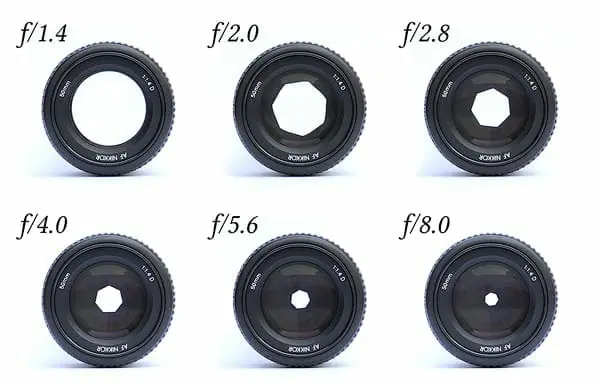
The larger the aperture diameter, the more light the camera can collect over a standard exposure.

Attribution – Wikipedia

Opening the aperture increases image quality because you can reduce the ISO, thus inducing less noise in the image.

Below, you’ll learn why these lens attributes are so important.

Currently, I shoot with the Nikkor 14-24mm f/2.8 for all my night sky images.

Best Tripod for Star Trails Photography?

A carbon fiber tripod, with a sturdy, stable adjustable ball-head is the best for star trails photography.

Carbon fiber reduces tripod vibration providing sharper images.

You can try cheaper tripods, but they won’t produce the sharp images that more expensive tripods will.

If your tripod, or ball head, move even the slightest over the long exposure, your images will not be sharp.

Currently, I shoot with the:

  • Feisol Tournament CT-3342 3-Tripod
  • Really Right Stuff BH-30 Ball head
  • Really Right Stuff L-Bracket

Best Intervalometer for Star Trails Photography?

An intervalometer connects to your camera allowing you to take exposures longer than 30 seconds.

It also allows you to take multiple images, one after another, all at the same settings, for an extended amount of time.

Any intervalometer will work, so long as you can control:

  • Shutter speed
  • Time between shots
  • Number of shots total

I’ll cover the technique in the following sections.

Step 2: Planning Your Shoot

Doing some basic planning before the shoot will greatly improve the chances of coming home with a good shot.

The following videos cover my step by step planning technique for star trails photography and milky way photography.

I’ve also included each of the steps, written in detail, below the videos.

Covers Steps 1-3 Below

Covers Steps 4-5 Below

Step 1 – Determine the Moon Phase

You can shoot star trails under any moon phase, but the results will drastically differ.

Find the current moon phase, here, and determine your trip dates from this information.

During the full moon, it’s almost too bright to shoot star trails at all, and you can barely see them in the sky.

When the moon is at half or less is a great time to shoot star trails photography.

The moon provides some nice lighting to the landscape but does not dominate the brightness of the scene.

This allows you to actually see the stars in the sky and still get some nice light on the landscape.

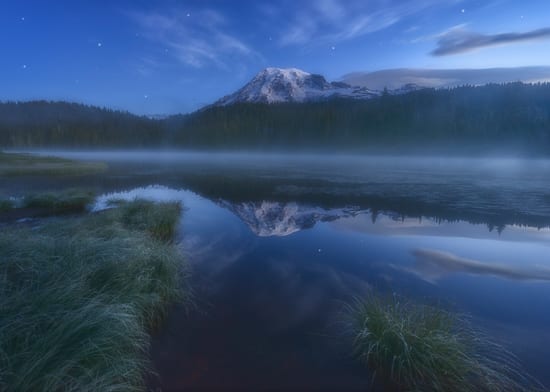
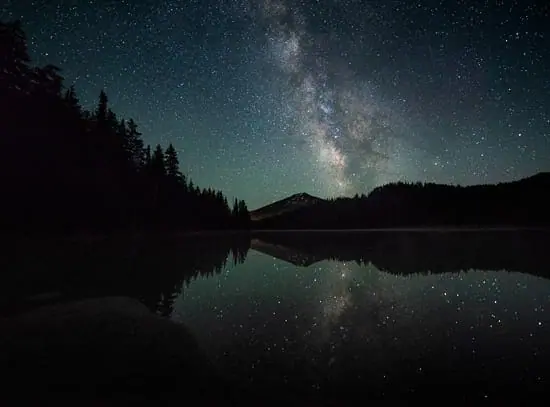
The following two examples, although not star trails, gives a good idea of how much a scene can change from moonlight.

The first has crescent moonlight on the scene.

The second has no moonlight on the scene.

You can learn these types of shots in my Star Photography Guide.

Step 2 – Find a Location without Light Pollution

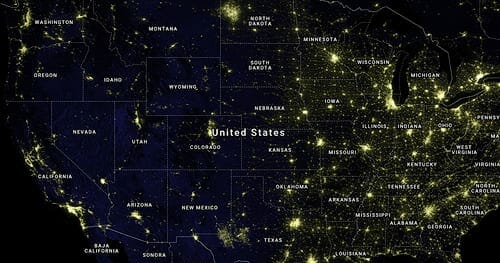
Blue Marble Light Pollution Map is the best tool I have found.

It works for the entire planet.

Areas that are black on the map are great for night sky photography.

Areas that are lighter have light pollution. Avoid these.

Step 3 – Find the Best Weather

This all depends on the shot you want.

You can get great results when there are perfectly clear skies, where the star trails scene dominates the sky.

It’s also great to shoot on nights with 20-50% cloud cover in the sky.

This provides fewer trails, but move cloud movement.

This is covered in video 2 above.

Step 4 – Determine Moonrise & Moonset Times

It does not matter if you shoot under moonlight or not.

It’s best to shoot during a time when the moon will not be rising or setting.

Then the light stays fairly constant on the landscape during your exposure.

This leads to better results.

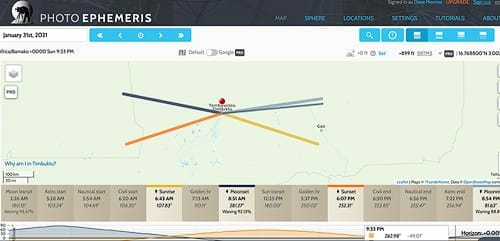
Use the moonrise and moonset times in Photographers Ephemeris (TPE). I have linked this below.

Start your shoot at least 2 hours before a moon or sun, rise or set event.

TPE provides sunrise, sunset, and twilight times as well as moonrise and moonset times.

Get TPE For: Desktop | iPhone | Android

Step 5 – Learn to Use Google Earth / Maps

Google Earth is a great way to see where you will be shooting prior to arrival.

This is a great way to visualize what you might want to shoot.

You could also arrive early and walk around the location when it’s light out.

I usually do both.

Out of all the tools on this page, Google Maps / Google Earth is where I spend the most time.

I teach this in video 2, above.

Get Google Earth For: Desktop | iPhone | Android

Step 3: Focus Your Lens at Night

Always focus your lens before dialing in any other settings. This makes all the rest of the steps easier.

Since the distance between us and the stars is very large, focusing at or near infinity works well for star trails photography.

Although your lens may have an “∞” symbol on it, this is not always the ideal place to focus.

Here’s one method I use to focus for star trails photography.

Method 1 – Set Your Focal Point During the Day

When you’re starting out, it’s much easier to focus during the day, before your shoot, then use this same focus point once it gets dark.

Step 1: Set up your camera & lens that you plan to take out shooting with you.

It doesn’t matter where you do this so long as you can see a distant object or horizon at least 200 feet away from you.

Use the widest focal length and an f-stop ranging from f/2.8 to f/5.6.

Step 2: Find an object approximately 50 feet (15 meters) in front of your camera and focus on it.

You could also take 15-20 large steps to approximate this distance. It does not have to be perfect.

You can focus on anything in this area.

Step 3: Take a few exposures to verify you have sharp focus.

Verify this focus extends all the way out to the most distant horizon in your scene.

  • If the focus doesn’t extend this far move the focal point slightly back in the scene.
  • When the distant horizon is in focus, this ensures that your stars will also be in focus.

Step 4: Use white tape & mark your focal point on the lens. You can also tape it in place.

White tape is easy to see at night.

Remember, this is the focal point for the specific focal length and f-stop value selected only.

Advanced Focusing Tips & Techniques

There are 6 more night photography focusing techniques provided in my ebook, Photograph the Night Sky.

Step 4: Camera Settings & Noise Reduction

This section provides a quick reference for each of the settings.

The next sections teach each, step by step.

Camera Mode

Manual Mode allows you to manually adjust the ISO, Aperture, and shutter speed by hand.

Image Format Settings

RAW Image Format provides the least amount of noise and the best ability to edit the image files when you get back from your shoot.

Metering Mode

You can use any metering mode since it will be too dark for your camera to meter the scene.

I just leave mine on center-weighted average, since that’s what’s best for landscape photography as well.

White / Color Balance

Kelvin Values between 4000K-5500K work best for night photography settings.

  • Kelvin white balance mode controls this setting.
  • Higher Kelvin values make the photo more yellow, where lower values make the photo bluer.

Try to match the Kelvin values to your scene, so the photo on the back of your screen looks like the scene you see with your eye.

The goal is for the white balance to be “neutral” and match this scene.

This will ensure your histogram reading is correct.

My White Balance Shooting Technique Video has detailed info on this topic.

Focal Length

Full Frame Focal Lengths: 14-50mm are the best focal lengths for star trails photography.

Crop Focal Lengths: 10-30mm will work well.

The larger the focal length (zooming in with your lens), the longer your star trails will appear over a shorter amount of time ( Reference – Selecting Exposure Time for Milky Way Photography ).

If you don’t want to wait around all night to capture a star trail scene, a zoom lens will be your best choice.

If you’re interested in capturing a full, wide-angle star trail scene showing a long star trail transition across the sky, a few hours will be required.

The best way to see this in physical form is to go out and try some test shots in the field.

This will show you how different lenses or focal lengths exhibit different star trail lengths over a given period of time.

F-Stop / Aperture Settings

The best f-stop setting for star trail photography is f/2.8 to f/5.6.

I’ll go in-depth on why this is the best setting in the next section.

My Aperture & Depth of Field Guide can be a great reference if you need a brush up on these basics.

Exposure Time / Shutter Speed

Shutter speeds ranging from 20-90 seconds are the best for star trails photography.

I use a technique that takes a few hundred-star images, without trails, and overlays them on top of each other, creating a star trails image.

You will learn this technique below.

Reference my Shutter Speed Guide if you need to brush up on the basics.

ISO Settings

ISO settings between 500-3200 are the best for star photography.

The following section will teach you precise ISO setting selection.

Reference my ISO Photography Guide if you need to learn more about the basics.

Noise Reduction & Long Exposure Camera Settings

Some cameras have noise reduction settings for long exposure and high ISO.

Turn both of these settings to OFF.

They are only applied to JPEG Images.

Since you are shooting in RAW, having them on only wastes battery.

Step 5: F-Stop & Depth of Field Settings

Depending on the amount of moonlight in the scene, f-stop values ranging from f/2.8 to f/5.6 area ideal.

When there is some moonlight, shooting at higher f-stop values, such as f/5.6 can extend the depth of field giving an overall sharper image.

When there isn’t any moonlight, shooting at f/2.8 will be necessary to collect enough light from the scene.

The goal is to keep the aperture wide enough that you don’t have to increase the ISO too much, but can still get an extended depth of field to keep the foreground and stars sharp.

Shooting under a crescent moon is ideal because the ISO can be kept low while increasing the f-stop to f/4 or f/5.6 to ensure sharp focus in the entire composition.

I recommend taking some practice shots at all different settings, ranging from f/2.8 to f/5.6, then comparing them when you get back home.

There are pros & cons to each variation.

Step 6: ISO Settings & Noise

Read through this section and the shutter speed section fully, then come back & try it with your camera.

This section won’t make complete sense until you integrate it with the shutter speed section below.

ISO settings for star trails photography depend on how much ambient light (moon/light pollution ) is present in the scene you are shooting.

It works well to shoot star trails when the Moon is visible in the sky.

Make sure to shoot in the opposite direction of the Moon so it will light your scene nicely.

The moonlight allows you to capture well-exposed star trail shots while keeping your ISO fairly low.

Try starting at ISO 300, increasing as required to approximately ISO 800.

Increase your ISO until your image is correctly exposed.

If your shot isn’t bright enough, and you can still increase your exposure time, always do this instead of increasing your ISO too far beyond 800.

ISO is the worst-case method of increasing the brightness of your star trail shots since it is the only setting that degrades image quality.

For those of you shooting with a crop sensor, it’s best practice to stay within the range of ISO 160-500.

Trying higher ISO values such as 800 will never hurt.

It’s all about getting a nice exposure, without much noise.

Step 7: Shutter Speed Settings

There are two different methods for capturing star trails images.

Method 1, covered below, takes 50-100 exposures of the night sky, with the exact same composition.

Next, each of these exposures is layered in Photoshop, producing a star trails image.

Method 2 involves one really long exposure. I don’t recommend this method, but you can try it using the steps below.

Method 1 – Star Trail Stacking

Preferred Method

The star trail camera settings for each of these overlaid exposures is exactly the same.

The only thing that changes is the position of the stars relative to the Earth.

Why is Stacking Star Trails Images the Best Option?

Using multiple exposures will allow you to keep your exposure time and ISO fairly low, in turn reducing noise.

Almost all cameras, when pushed to take very long exposures ( 3+ minutes ) start to exhibit what is known as long exposure noise.

To prevent this, Method 1 is used.

Full Frame & Crop Sensor Shutter Speeds

Full Frame Camera: 30 – 60 seconds works well to capture star trails per Method 1 as described below.

The longer the exposure the more “far away light” your camera will capture.

A longer exposure picks up more light at a greater distance from our planet.

In turn, you will see stars that you wouldn’t have with a shorter exposure time.

On the other hand, light sources closer to our planet will appear even brighter at longer exposure times.

This applies to any type of night photography.

Using a longer exposure will allow you to keep your ISO low, reducing noise, and providing a higher quality image.

Crop Sensor Camera: 30 – 120 seconds works well when shooting per the instructions provided in Method 1 below.

Since crop sensor cameras don’t handle high ISO as well as full-frame cameras, the exposure time may need to be increased.

Don’t be afraid to try out 120-second exposures and see how they work using a lower ISO and in turn providing higher overall image quality.

Selecting the Number of Exposures

The more exposures you take, the longer your star trails will be.

You can always take more exposures and then throw some of them out if you want shorter star trails in the final image.

I recommend taking 80-100 exposures your first time and going from there.

Since your location on Earth, your lens and camera model, composition, and the desired effect ( long or short trails ) will directly affect the number of exposures required, it is impossible to provide an exact calculation.

The only real way to perfect this skill set is going out and taking practice shots until you get the desired results.

The number of exposures required for star trails directly correlates to the percentage of the composition that is taken up by the night sky.

For example, if your composition is half sky and half foreground, then your stars would have to move across half of your photo to produce star trails across the entire sky.

If your composition is only ¼ night sky, and ¾ foreground, then the stars only have to move across ¼ of your photo.

In turn, this requires less elapsed shooting time and a smaller number of exposures.

Intervalometer Settings for Star Trails Photography

I highly suggest using an intervalometer.

Otherwise, you will be pushing the shutter button again and again for hours.

Some cameras have an interval timer mode built into them, this works as well.

Always verify that you have your settings perfectly dialed in for 1 exposure, before taking a series using these exact same settings and the intervalometer.

Shutter Speed / Exposure Time: The length of each exposure.

Time Between Each Exposure: I would suggest using 1 second between each photo.

For example, if the time between exposures was 1 second, your camera will take a photo, wait 1 second, then take the next photo.

This will continue until your elapsed shooting time ( described below ) has ended.

Elapsed Shooting Time / Total Number of Exposures: The total length of time that your camera will be taking photos or the total number of photos you would like your camera to take.

Since these are dependent on one another and the time between each exposure, only one needs to be input into your camera timer.

For example, you may want to take 100 exposures at 30 seconds each, with 1 second between each shot.

Method 2 – Single Exposure ( Second Best Option )

Another method to photograph star trails is a single long exposure, captured over a few minutes of elapsed time.

In most cases, single exposure star trails won’t be able to transverse the entire composition of the photo. Instead, these star trails will resemble long streaks of light in the sky.

Follow these steps to try this method:

You will need to turn on your camera’s Long Exposure Noise Reduction setting.

Find this setting by looking in your camera instruction manual or online. Not all cameras have this setting, but nearly all full-frame cameras do.

After doing so, focus your lens per the steps above.

Next, select your composition and try an exposure time of 3-4 minutes with an ISO of 600-800 and take a picture.

If your picture is too dark, increase the exposure time. If your trails aren’t long enough, increase the exposure time. This is all personal preference.

Increase and decrease the ISO as required if there is too much noise in the photo.

Method 2 is all about trial and error, finding which settings work best and which don’t.

Eventually, you will start to see photos you like! That being said, USE METHOD 1 if at all possible:)

Video: Photo Editing for Star Trails Photography

Lightroom & Photoshop Video Tutorials

Now that you learned how to take star trails photos, it’s time to post-process / edit your pictures.

I don’t prefer star trail photography software. It can be done without any extra plugins using the following steps.

My Night Photography eBook

Click Here & Access the Book

How to 10X Your Learning Speed

The fastest way to master landscape photography is by learning firsthand from someone who has spent over a decade optimizing these skills through trial and error.

Blogs and videos are great for theory, but they cannot replace real-time, field-based instruction.

I offer high-intensity workshops and tours designed for all skill and fitness levels.

In a single 3-day session, I can teach you my entire system—start to finish.

You will receive 1-on-1 feedback in the field that will improve your skills faster than years of self-teaching ever could.

My students often learn more in three days than they have in the previous 20 years on their own.

Stop guessing and start creating portfolio-grade images.
CLICK HERE & SEE MY UPCOMING WORKSHOPS

Northern Lights Photography – The Definitive Guide [2026]

Learn the latest northern lights photography techniques for 2026.

This guide covers everything you’ll need including camera settings, equipment recommendations, and tips for planning your shoot.

Scroll down & start learning!

Table of Contents


  • Camera Equipment – Northern Lights Photography
  • Planning Your Shoot
  • Focusing Your Lens at Night
  • Camera Setup & Settings
  • F-Stop Settings
  • Shutter Speed & ISO Settings
  • Final Words of Advice
  • My Night Photography eBook
  • How to 10X Your Learning Speed

Camera Equipment – Northern Lights Photography

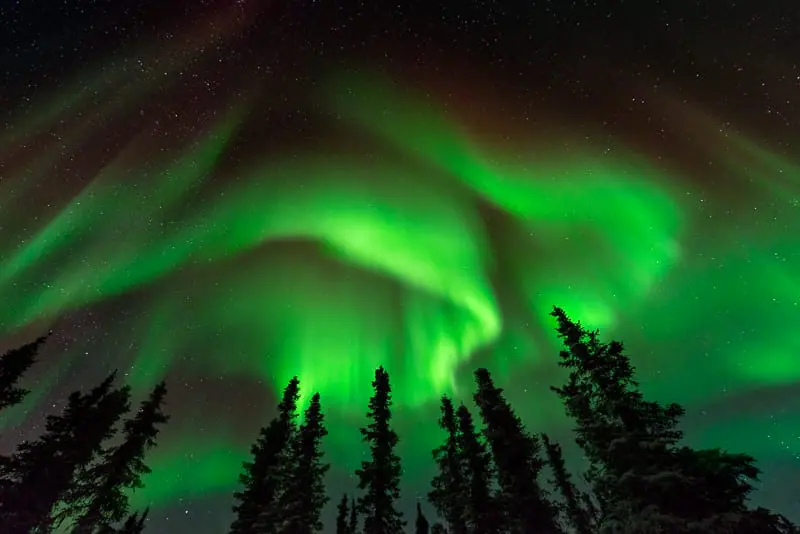
photo showing northern lights in alaska

This section includes the equipment requirements for northern lights photography.

If you’re interested in the brands & models I use and recommend, check out the Star Photography Camera & Lens Recommendations page for more details.

Best Camera for Northern Lights Photography?

A camera with manual mode is required for northern lights photography.

You must be able to control f-stop, shutter speed, and ISO, each manually.

I use and recommend full-frame cameras such as the Nikon Z7.

A full-frame camera will produce much higher quality images with less, noise than a crop sensor camera.

You can still use a crop sensor camera but the image quality will be much lower.

Bring at least 3-5 batteries for your shoot!

Best Lens for Northern Lights Photography?

A wide-angle lens allows you to capture vast landscapes with the northern lights overhead.

I recommend minimum f-stop values ranging from f/2.8 to f/4 for northern lights photography.

  • Full frame focal lengths between 14mm and 30mm are recommended.
  • Crop sensor focal lengths between 10mm and 25mm are recommended.

Shooting at f/2.8 produces a very wide aperture opening, in turn, allowing more light to hit the image sensor over a standard exposure time. This is taught below.

You’ll learn why this is so important, below.

Currently, I shoot with the Nikkor 14-24mm f/2.8 for all my night sky images.

Best Tripod for Northern Lights Photography?

A carbon fiber tripod, with sturdy legs and adjustable ball head is great for northern lights photography.

Cheaper tripods will also work but usually nowhere near as well.

Carbon fiber tripods reduce vibration in the legs providing sharper images.

It’s also essential to use a tripod head that does not move at all over the long exposures required for northern lights photography.

Currently, I shoot with the Feisol Tournament CT-3342 3-Tripod and Really Right Stuff BH-30 Ball head & L-Bracket.

Best Intervalometer for Northern Lights Photography

You won’t need an intervalometer for shooting the aurora since none of your exposures will extend beyond 30 seconds.

To reduce camera shake and create sharper images I use the Exposure Delay Mode on my camera. 

Set a 5-second timer to wait 5 seconds before taking each shot.

This will remove any camera shake from pushing the shutter button.

Planning Your Shoot

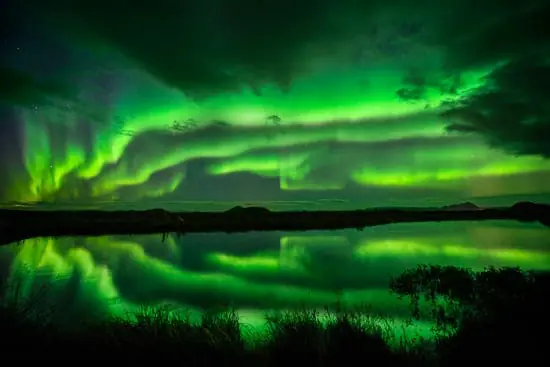
photo showing northern lights in norway

Planning ensures you don’t waste night after night hoping to get some good shots of the northern lights.

Using this planning technique will increase your odds of getting a good shot.

Step 1: Find Dark Skies

The easiest way to find an area with dark skies is to check the Blue Marble Light Pollution Map which is a Google / NASA collaboration.

The black areas are free of light pollution, while white and grey areas have high light pollution.

Shooting in dark areas will provide the best results, most vivid colors & detail.

Step 2: Find Clear Skies

You don’t need perfectly clear skies to get some great shots.

I usually aim for sky cover percentages between 0%-30%, which you can see on the blue line in the graphic below.

The following graphic is from NOAA’s website for Fairbanks Alaska. 

Some websites call this cloud cover percentage.

You can use your local weather website to find the cloud cover percentages.

Step 3: Check the Aurora Activity

Most countries in the Far North have their own Northern Lights activity service.

The northern lights activity index ( Kp-index ) ranges from 0-9 with 0 being the lowest amount of activity and 9 being the greatest.

Kp-index ratings of 5 or great are considered a storm.

I prefer to shoot on nights with a KP index of 4 or greater.

You can get some great shots even with a KP index of 2.

The photo in this section was from a night with a KP index of 9. 

Here is a list of the forecasting websites I have used in the past.

Space Weather Live OVATION Auroral Forecast: A really nice visual website that provides the current aurora forecast as well as other interesting facts which will help you to capture a photo of the Northern Lights.

Iceland’s Vedur Aurora Forecast: If you’re going to be shooting in Iceland this is the site for you.

You can also use the aurora activity predictions from this website when visiting Norway, Sweden, Greenland, or anywhere else in close vicinity.

Space Weather Aurora Forecast: Another great website with a broad overview of the aurora forecast for a multi-day time frame. Space Weather’s website is worth spending some time visiting!

Focusing Your Lens at Night

Since the sky & northern lights are very far away from where we stand on earth, focusing at or near infinity will work well for sharp images.

Most lenses have an “∞” symbol on them which is used to mark the approximate infinity focus point.

Focusing on this symbol doesn’t always produce the sharpest images.

It’s better to test first using the method below to ensure sharp focus for your shoot.

Experimentation and practice are key to finding out what works and what doesn’t! 

There are many different options for focusing your lens at night.

I’m going to teach you one of my favorites below.

Method 1: Setting Your Focus During the Day

If it’s your first time out shooting at night, this method works really well to cut down on the confusion that can happen when it gets dark.

Step 1: Get your camera & lens set up during the day. You will want to use the same lens, focal length, and f-stop that you will use to shoot at night.

You can do this at your house, outside a hotel, or anywhere that’s easy.

  • Open the f-stop to f/2.8 or f/4.
  • Use the widest focal length possible. I recommend 14-25mm.

Step 2: Focus on something in the distance, approximately 50 feet out in front of your camera.

Taking 15 large steps from your camera will give you a good approximation on this distance.

Pick any object in this area and focus on it.

Step 3: Verify you have sharp focus by taking a couple of practice shots and zooming in to make sure the focus point is sharp.

Next, verify that the horizon in the image is also sharp, or whatever the furthest object in your composition happens to be.

Step 4: Use a piece of tape to mark this spot on your lens, or tape it down so the focal ring does not move.

White tape is easy to see in the dark.

This is the focal point and focal length you will use to shoot the northern lights. 

I always shoot at my widest focal length for all night sky shots and crop down if required.

Advanced Focusing Tips & Techniques

My book, Photograph the Night Sky, covers 6 more focusing techniques for night sky photography.

Camera Setup & Settings

This section provides a quick reference for the in-depth discussions in the following sections.

Shooting Mode

Manual Mode allows you to manually adjust the ISO, Aperture, and shutter speed by hand.

Image Settings

RAW Format will produce the best results for northern lights photography.

Metering Mode

The metering mode does not matter since at night your camera meter is not accurate.

I use center-weighted average for landscape photography, so leaving it on that works well.

Color Balance / White Balance

Kelvin Values of 3000-5000 work well for northern lights photography.

Use the Kelvin white balance setting on your camera to control this function.

My White Balance Shooting Technique Video has detailed info on this topic.

The goal is to “neutralize” the color on the camera so it matches exactly what you see with your eyes.

The colors of a successful image should be very close to what you see in front of you, in the sky.

Lens Focal Length

Full Frame Focal Lengths: 14-50mm work great for northern lights photography.

Crop Focal Lengths: 10-40mm will work well for northern lights photography.

F-Stop / Aperture Settings

I recommend f-stop settings of f/2.8 to f/4 for northern lights photography.

The following section will go in-depth on why these are important.

My Aperture & Depth of Field Guide provides a great resource in the details of f-stop for all types of outdoor photography.

Shutter Speed / Exposure Time

I recommend shutter speeds of 1 second to 15 seconds for northern lights photography.

This will really depend on how quickly the aurora is moving through the sky.

The following section covers this in detail.

Reference my Shutter Speed Guide for an overview of shutter speed basics for outdoor photography.

ISO Settings

ISO settings of 500-2000 work well for northern lights photography.

This will all depend on how bright the lights are in the sky.

This is covered in the following sections.

Reference my ISO Photography Guide if you need to learn more about the basics.

In-Camera Noise Reduction Settings

Some cameras have settings to apply noise reduction, in the camera.

If you have these settings, turn them OFF.

They are only applied to JPEGS.

While shooting in RAW they just waste battery.

F-Stop Settings

f/2.8 is the best aperture setting for aurora photography.

The wide lens opening allows your camera’s sensor to collect a lot of light from the scene while keeping your ISO and image noise, low.

You can still keep the foreground acceptably sharp while shooting at f/2.8, but can also experiment with f/3.5 or f/4.

I don’t recommend opening your aperture any wider than f/2.8.

With very wide apertures it becomes hard to focus at night, over the entire depth of field.

The key is allowing the most amount of light to hit your camera’s sensor in the least amount of time, in turn maintaining a lower ISO, inducing less image noise.

Shutter Speed & ISO Settings

I grouped shutter speed & ISO together due to the fact that you’ll need to change them both at the same time since they directly reflect on one another.

After a few hours of photographing the Northern Lights, using the skill sets provided below, you will easily be able to adjust both of these settings simultaneously, obtaining great results.

Ask yourself the following questions to determine the camera shutter speed and ISO settings for northern lights photography.

Question 1: How Quickly is the Aurora Moving Through the Sky?

With high-level aurora activity, the Northern lights can move through the sky very quickly.

To capture all of the nice color and detail in this scene, without your photo looking like a “blob of color”, you’ll need to shoot at a much shorter exposure time than if the aurora was moving slowly through the sky.

Think about it this way…

If the aurora is moving very quickly through the sky, and you take a photo at a 30-second exposure, instead of seeing the instantaneous view that your eyes see, your camera will actually pick up the entire movement of the aurora through the sky over that 30-second time frame.

The details and colors will become the average of the 30-second exposure for each pixel.

As seen with long exposures of water or cloud scenes, all of the color and movement mixes together.

This is not the goal for photographing the Northern Lights, we want, vivid color and nice detail.

Keeping your shutter speed between 3-25 seconds will work very well for shooting the northern lights.

When the aurora is moving quickly, try 3-7 second exposures.

When it’s moving slower, or it’s not as bright, try 10-25 seconds.

You can increase or decrease these times as you see fit, they are just rules of thumb!

Experimenting and taking as many shots as possible, at different shutters speeds will help you to learn what works best!

Question 2: How Bright is the Aurora in the Sky?

This section assumes that you are already well versed in the basic technical aspects of the photography histogram as taught in depth on this page.

You can also reference the following histogram video, if you need a refresher, prior to moving on.


All of the other settings have now be adjusted.

It’s time to select an ISO value.

Since the northern lights changes color, speed, and brightness all throughout the night, you’ll also need to constantly adjust your camera settings to match this dynamic situation.

The goal is to keep your ISO low as possible, while still shooting at the correct f-stop and shutter speed to correctly expose the scene.

Here are the steps to adjust ISO:

Steps 1: Start out shooting with an ISO of 400-800 and take a practice shot.

Step 2: If your practice shot wasn’t bright enough, increase your ISO to approximately 1200 and take a practice shot.

Step 3: If the photo still isn’t bright enough, continue to increase your ISO until it is. I usually shoot in the ISO range of 800-4000.

Always keep in mind that your image should not be (in terms of the histogram ) correctly exposed, you are shooting at night, so the image can also be dark.

You can bring out nearly all of this dark detail in photo editing.

Always watch your histogram to make sure you’re not losing any dark detail off of the left-hand side.

You will also want to make sure that you’re not “blowing out” any highlights, meaning the histogram isn’t dropping off the right-hand side.

Let’s look at and analyze a few example images so you can see exactly what I’m talking about.

The following images are straight out of my camera ( RAW Files ), and exported to JPEG format for display.

This is how the images looked on the back of my camera screen after taking them.

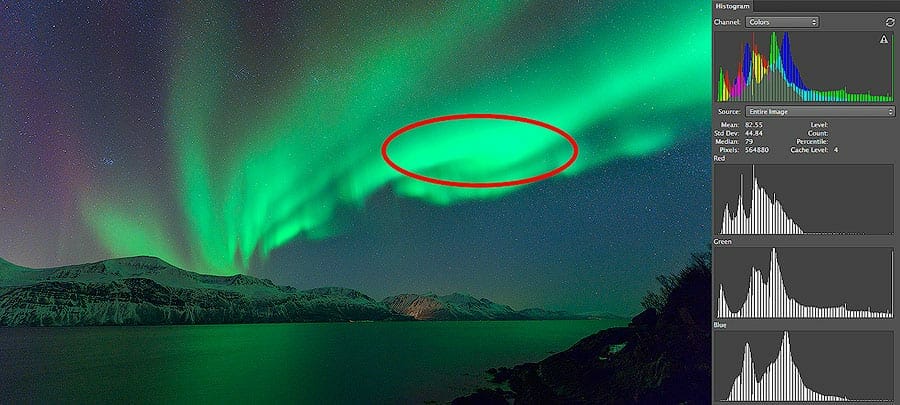
Image Example 1 – Overexposure

image showing overexposed northern lights image in photography

Camera Settings: 10 Seconds, f/2.8 ISO2500

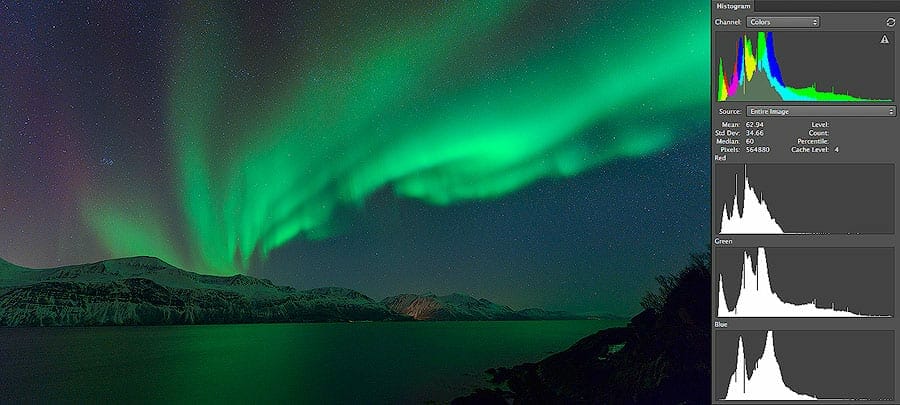
When photographing the Northern Lights it’s always better to underexpose the photo as not to blow out the green channel.

When you’re taking photos of the aurora, it’s essential to watch your color histogram, even more than your luminosity histogram.

It is very easy to “blow out” or overexpose the green channel, which makes your photo lose color and detail.

This can be seen as circled in red on the graphic above.

You will also want to watch the Luminance Histogram to make sure you’re not blowing out or overexposing the photo as a whole.

Image Example 2 – Correct Exposure

image showing correctly northern lights image in photography

Camera Settings: 10 Seconds, f/2.8, ISO2000

All of the color channels and luminance channels fall within the left-hand and right-hand bounds of the histogram, meaning we’re not losing any detail in the dark areas or blowing out in highlights in the light areas.

Notice that the histogram is still shifted very far to the left.

This is okay and makes sense. The image was taken at night, so the histogram will always look like this.

Final Words of Advice

The only guaranteed way to become good at anything is trying it for yourself and see what works.

After a few nights practicing the provided skills under the night sky you will easily grasp all of the concepts.

Always remember you should never increase the ISO to obtain a brighter image prior to opening your aperture to the widest possible value ( f/2.8 works great ), and dialing in the maximum exposure time while still maintaining nice detail in the Northern Lights.

You may also enjoy my other tutorials on Milky Way Photography & Star Trails Photography.

My Night Photography eBook

Click Here & Access the Book

How to 10X Your Learning Speed

The fastest way to master landscape photography is by learning firsthand from someone who has spent over a decade optimizing these skills through trial and error.

Blogs and videos are great for theory, but they cannot replace real-time, field-based instruction.

I offer high-intensity workshops and tours designed for all skill and fitness levels.

In a single 3-day session, I can teach you my entire system—start to finish.

You will receive 1-on-1 feedback in the field that will improve your skills faster than years of self-teaching ever could.

My students often learn more in three days than they have in the previous 20 years on their own.

Stop guessing and start creating portfolio-grade images.
CLICK HERE & SEE MY UPCOMING WORKSHOPS

  • 1
  • 2
  • 3
  • Next Page »

About Dave Morrow

  • About Dave Morrow
  • Ideas Blog
  • Photography Gear
  • Hiking & Backpacking Gear


Star & Night Sky Photography Guides

  • Milky Way & Star Photography Guide
  • Star Trails Photography Guide
  • Northern Lights Photography Guide
  • Recommended Cameras & Lenses for Night Photography
  • eBook – Photograph the Night Sky

Camera Technique & Shooting Guides

  • Sharp Focus Photography Guide
  • Shutter Speed Photography Guide
  • F-Stop & Depth of Field Photo Guide
  • ISO Photography Guide
  • Exposure Triangle Photography Guide
  • Camera Sensor Size & Image Quality Guide
  • Color Theory Photo Guide


Copyright © 2009–2026 Dave Morrow Photography LLC, All Rights Reserved | Contact | Terms of Service | Privacy Policy