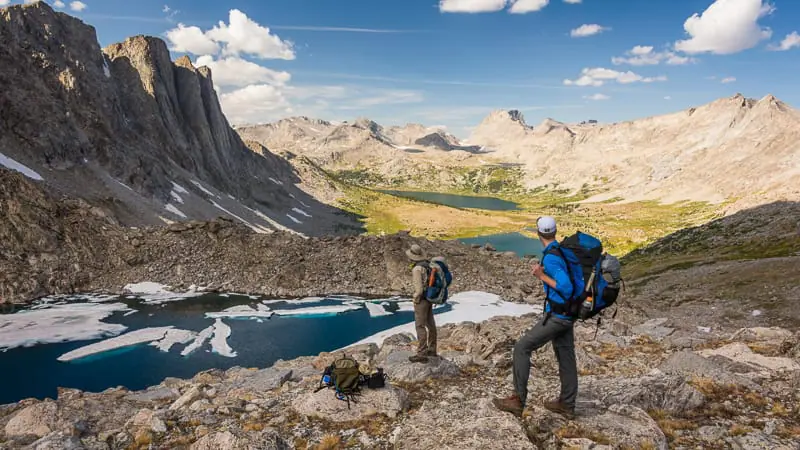
If you’re finishing your hiking days sore, stiff, and exhausted—there’s a simple fix.
After 22,000 miles on the trail, I’ve optimized my nutrition for maximum endurance.
Most hikers eat low protein, high carb, poisonous premade meals, with tons of ingredients you can’t pronounce.
The result? Low energy, unwanted belly fat and a body that can’t bounce back day after day.
This guide teaches you how to fuel with real, non-processed food that weighs less and performs better.
Table of Contents
Video: Favorite Ultralight Hiking Food
Watch the video first, then read the guide below.
Optimizing Hiking Food & Endurance

I eat 4500 to 5000 calories per day, with the main requirement being 250 grams of protein & high fat.
Below, I’ll show you how I calculate these so you can adjust them to your own weight.
The following stats are not to brag, but to show you what is possible with the right food and training:
- 41 years old, 175 pounds and 10% body fat
- 22,000+ miles of hiking over last 13 years
- Usual day: 10-25 miles with 3,000 – 10,000 feet of gain
- I don’t get sore after these days and can do them back to back endlessly
Fat Adapting Your Body for Endurance
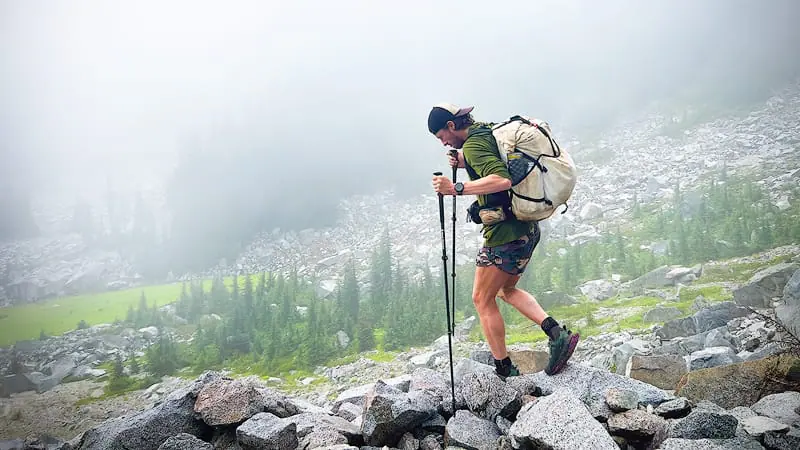
I’ve fat adapted my body by doing a few months of keto / low carb diet and a few months of carnivore, zero carb diet.
This was the most pronounced change in my energy and recovery that I’ve ever seen.
It reduced my body fat, increased muscle mass and doubled my energy on the trail.
I still eat low carb at home, but add some carbs as supplements on the trail or on heavy workout days, as noted below.
A low-carb diet forces the body to shift its primary fuel source from glucose to stored body fat, a process known as fat adaptation.
Doing this taps into an almost limitless energy reserve—thousands of calories of body fat—reducing the need for constant sugar ingestion.
For endurance athletes, this metabolic flexibility is a game-changer.

If you combine year round endurance training, healthy high protein whole food, and strength / recovery, there is no reason to be sore or tired.
If you would like to deep dive on endurance training and metabolism, I recommend the following books:
Simple Macro Nutrients Overview

The main 3 macro nutrients that make up food are the following.
- Fat Energy: Slow-burning all-day energy, great for zone 1-2 heart rates, like hiking
- Carb Energy: Fast burning, short half-life energy, great for higher heart rate zones, 3-5, like running or strenuous high elevation gain hiking
- Protein (Amino Acids): Used for muscle and tissue, building, recovery & repair
Your body requires fat and protein to live.
Carbs are not required by your body to live and should be used as a supplement for specific heart rate zone activities.

Most hikers eat too much carb energy, which causes their insulin and glucose to spike, making them tired in low heart rate zones.
- Your body stores excess energy as fat.
- “Love handles” or visceral fat occur from eating too much energy.
Protein is very filling. Energy is not as filling.
Eating high protein ensures you become full before you can eat too much energy.
This ensures your muscles can recover from prolonged activity without wasting calories on energy you don’t actually need.

I eat high-fat and high-protein on the trail and at home, which is optimized for low heart rate endurance events like hiking.
I use natural sugar carbs as a supplement, not a food source.
They should be used sparingly in 100-calorie doses a few times during the day before intense climbs or higher heart rate sections of the trail.
If you want to really optimize your hiking meals, pay attention to micronutrients & nutrient balance, as well as the macros.
How to Calculate Protein & Energy Macros

I highly recommend an app like Cronometer to build out your hiking meals.
- The same meals are eaten every day to make things simple
- I don’t eat big meals but snack all day
- These meals can be cooked or cold-soaked
- None of the foods have added sugar
- All the ingredients are whole foods without any added chemicals or words you can’t pronounce
I package them all into single servings in ziplock bags.
Step 1: Calculate Your Protein Intake
My ideal protein intake is 1.3-1.5 grams / pound of body weight for multi-day endurance activities.
- 1.3 grams for shorter trips with less elevation gain
- 1.5 grams for longer trips with big elevation gain
- You will have to experiment with this on your own!
Step 2: Add Healthy Fat Whole Foods
Whole food protein already has fat naturally included.
The only fat I add is through extra virgin olive oil, which is great calorie to weight ratio for hiking.
This is added to my meals as noted in the section below.
Step 3: Add Whole Food Carbs as a Supplement
I use natural sugar carbs (fruits) sparingly as a supplement, eaten in small doses every hour or two while hiking.
The next section includes my favorites.
Step 4: Fill Any Missing Micronutrients with Supplements

At home I have no problem getting all the correct micronutrients from healthy whole foods.
On the trail it’s a bit harder.
After building out your meal plans using, Cronometer, check the micronutrients and fill them with supplements.
I’ve listed my favorite supplements in the sections below.
My Average Daily Macros for Hiking
Protein: 225-260 grams
Fat: 200-250 grams
Carbs: 100-200 grams
Hiking Food: What I Eat on the Trail

Different food works well for different people.
Just because something works well for me, does not mean it will for you.
Experimentation is key!
Increasing your protein intake and reducing your sugar intake will work well for most people.
What food you use to fill those requirements is up to you!
High Protein Meals – 3X Per Day
I choose either beef or chicken for this meal, so 1/2 cup of meat per meal.
- 1/2 Cup of Freeze Dried Ground Beef
- 1/2 Cup of Freeze Dried Chicken
- Bone Broth Powder to flavor beef or chicken
- Honey
- Extra Virgin Olive oil
- Container for olive oil
Quick Energy Carbs Snacks

High Protein & Fat Snacks

Hiking Supplements for Performance Enhancement

I use supplements to fill the micronutrients that aren’t provided in my hiking food.
Some supplements are used for performance enhancement for endurance activities.
I’ve provided a short overview of why I use each below.
Caffeine Pills: 100mg, 3x per day – 300mg total
A 100mg caffeine pill acts as a powerful ergogenic aid by blocking adenosine receptors in the brain.
This lowers your Rating of Perceived Exertion (RPE), making hard efforts feel easier. It also mobilizes free fatty acids for fuel, sparing muscle glycogen and delaying fatigue during long-distance events.

Salt Pills: 1 pill – 5x per day as needed
Combine these with the electrolyte pills below. Much cheaper than electrolyte drink packets.
A 1000mg salt pill (providing roughly 390mg of sodium) is a heavy-duty tool for maintaining fluid balance and preventing “bonking.”
For endurance athletes, it prevents hyponatremia—a dangerous drop in blood sodium levels caused by sweating out salt while drinking only plain water.

Electrolyte Pills: 3 to 5x per day as needed
These give you essential electrolytes beyond sodium.
Electrolyte are “multivitamins for hydration,” providing a balanced blend of sodium, potassium, magnesium, and calcium.
While a salt pill is just sodium chloride, electrolyte pills aim to mimic the exact mineral profile of human sweat, ensuring your nervous system and muscles remain “electrically charged” during long efforts.

Omega 3: 3 grams/pills per day with food
Omega-3 fatty acids, specifically EPA and DHA, are essential for endurance athletes. They reduce systemic inflammation, easing muscle soreness and accelerating recovery.
By acting as vasodilators, they improve blood flow and oxygen delivery to muscles, which can lower heart rate and perceived exertion during long, grueling efforts.

Creatine: 5 grams / 3x per day – 15 grams total
Creatine Monohydrate is often misunderstood as a “bodybuilder only” supplement, but for endurance athletes, it’s a secret weapon for high-intensity surges and fuel storage.
It works by increasing your stores of phosphocreatine, allowing you to regenerate ATP (energy) faster during short, explosive efforts.
Beet Root Powder: 1 scoop / day
A natural powerhouse for endurance athletes, primarily due to its high concentration of dietary nitrates.
Once consumed, these nitrates undergo a chemical conversion into nitric oxide , a potent vasodilator that relaxes and widens blood vessels, significantly enhancing your “aerobic engine”.
Whole Food Multivitamin: 1 / day
Cover the micronutrients that I may not get from freeze dried food.
Sleep & Recovery Supplements

Magnesium: 1000 mg 2 hours before sleep
Helps reduce resting heart rate for better recovery.
Magnesium is the “spark plug” of the cellular world, involved in over 300 biochemical reactions. For endurance athletes, it’s critical for ATP (energy) production and muscle relaxation. Without adequate levels, your muscles can’t efficiently convert glucose into the fuel needed to power through those final miles.
L-Theanine: 3 pills, 2 hours before sleep
Helps reduce resting heart rate for better recovery.
L-Theanine is an amino acid (found in green tea) that acts as a “mental balancer” for endurance athletes. It crosses the blood-brain barrier to promote alpha brain waves, creating a state of “relaxed alertness.” This allows you to stay calm and focused without the drowsiness associated with typical sedatives.
Cheat Sheet: The Science of Endurance Metabolism
This is a quick reference guide for endurance metabolism choices that I’ve made in the article above
Metabolic Flexibility & Fat Adaptation
Most hikers are “sugar burners,” relying on a constant stream of high-carb snacks. By fat adapting, you shift your primary fuel source to stored body fat.
- The Energy Reserve: A lean athlete has roughly 2,000 calories of stored carbs (glycogen) but over 50,000 calories of stored fat.
- The Benefit: Tapping into fat reduces the “spike and crash” cycle of insulin, providing steady energy for Zone 1–2 hiking.
- The Strategy: Use carbs only as a “high-octane” supplement for intense climbs (Zone 3–5) where oxygen is limited.
- Learn More: Training for the Uphill Athlete
The “250g Protein Secret” (Muscle Sparing)
While fat provides the energy, protein provides the structural integrity.
- Nitrogen Balance: On 20+ mile days with heavy vertical gain, the body can enter a catabolic state (breaking down muscle for fuel).
- The 1.5g Rule: Consuming 1.3–1.5g of protein per pound of body weight ensures you stay in an anabolic (building/repair) state.
- Recovery: High protein intake is the primary reason you can hike big miles / elevation gain, day after day, without soreness.
- Learn More: The PE Diet
Performance Micronutrients & Vasodilation
Supplements aren’t just for health; they are for “aerobic engine” optimization.
- Nitric Oxide (Beet Root): Relaxes blood vessels to improve oxygen delivery to working muscles.
- ATP Regeneration (Creatine): Helps your cells recycle energy faster during short, explosive efforts.
- Inflammation Control (Omega-3): Acts as a natural vasodilator and reduces systemic soreness.
Master Ultralight Hiking – All My Gear & Skills
Access all of my hiking knowledge, gear, guides and videos using the link below:
Master Ultralight Hiking: All My Gear & Skills – 22,000 Miles on Trail